Before you start
KeySigner on iPhone or Mac and a browser
- Use the GitHub account linked to the crates.io test profile. Save GitHub recovery codes separately.
- Use the Microsoft account linked to the NuGet.org test profile. Confirm recovery access and whether your work or school account allows third-party authenticator codes.
- Use a GitLab test account with confirmed email and access to a test project. Save GitLab recovery codes separately.
Data and access
Open the authenticator setup
Use a disposable maintainer account, record which account owns or can view the test resource, and confirm a separate recovery route. Keep the original browser session open during enrollment.
Find the account that controls sign-in
 crates.io via GitHub
- Use the GitHub account linked to your crates.io profile. In GitHub Settings, open Password and authentication and choose an authenticator app. Save GitHub’s recovery codes.
 NuGet.org via Microsoft
- Use the Microsoft account linked to your NuGet.org profile. For a personal account, open Security, choose Manage how I sign in, then Add a new way to sign in or verify. Choose Use an app, then Set up a different Authenticator app. For a work or school account, ask whether your organization allows third-party software codes.
 GitLab CI via GitLab
- Use a GitLab test account with a confirmed email. In Edit profile, open Access, then Password and authentication. Choose Register authenticator. GitLab asks for your current password and an authenticator code.
Check. You can identify the account provider and the exact account linked to the registry or project.
Add the account in KeySigner
Open Accounts, choose Add (+), then Sign-in codes and backup. Unlock Sign-in codes and choose Add account. Scan the provider’s QR code and check the label before saving. Keep the QR code and setup key private.
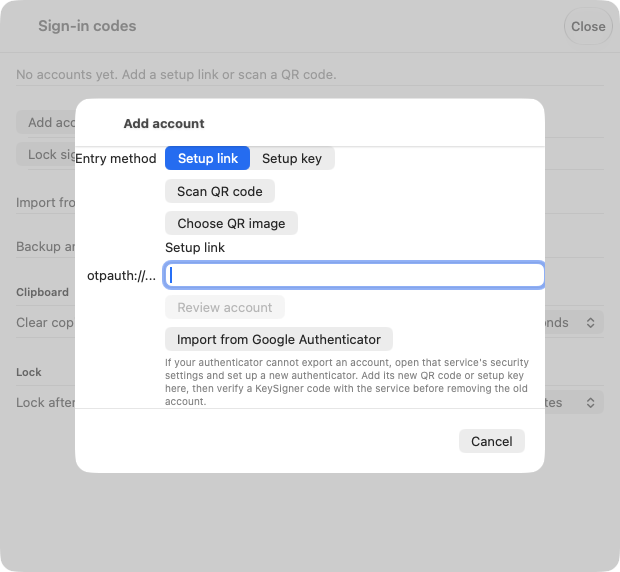
The KeySigner setup screen on Mac. Scan the setup code for your disposable account. View full-size screenshot Check. The KeySigner entry shows the intended maintainer account.
Confirm the first code
Choose Show code in KeySigner and complete the required approvals. Enter the current code in the provider’s setup form. Store the one-time recovery codes from GitHub or GitLab in a separate place. For a Microsoft account, confirm an independent recovery method before closing the original browser session.
Check. The provider confirms enrollment and you can reach the recovery method separately.
Check access to the intended resource
In a private browser, sign in to the same maintainer account and choose the authenticator code method when prompted. Enter a fresh KeySigner code. For crates.io or NuGet.org, check the profile and ownership of an existing test package, if available. For GitLab CI, open the intended project’s Pipelines page and check that you can view the expected pipeline.
Check. The browser accepts a new code and the expected test resource is accessible.
Check your result
Record which account asked for a code and what resource that account could access. Test a registry owner’s publishing rights and API key scope, trusted publishing, or a GitLab runner’s permissions separately.
What we tested
Tested on . KeySigner imported three separately generated test QR codes and produced codes that matched an independent verifier. The hosted enrollment steps follow the providers’ published instructions. Confirm access in your own test account.
If you get stuck
The site opens a different account or skips the code
Start with a private browser and verify the account and, for a Microsoft work or school account, the directory. Use the authenticator option if your account policy offers it. If the resource opens with the wrong identity, return to its profile or organization settings before changing any package ownership or pipeline access.